Hi, Erik. I took your the medium Arabian and the Egyptian flute with me to Morocco and played in the dunes of the Sahara....Larry in ArkansasNovember 15, 2019
Erik, Thank you for these wonderful flutes. I received my D Cocobolo Pennywhistle, my Bb Bamboo Sax and my Egyptian flute. They are wonderful....Yves in Nyon, Switzerland, September 8, 2019
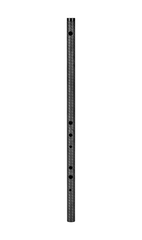
My Egyptian Flute has an ancient, theatrical presence that drops you into a forgotten time. It is one of my favorite flutes and seems to rewire the brain.
This flute is great for meditating, for improvising and for dramatic effect in storytelling.
To me, this flute is my "Jesus Flute". When I play this flute, it takes me to the place where I can sense His presence as though He were walking by.
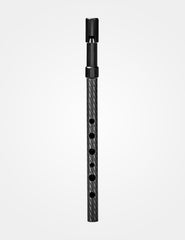
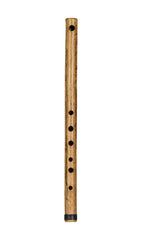
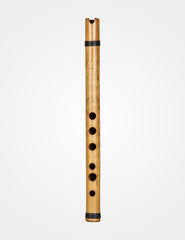
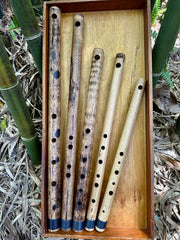
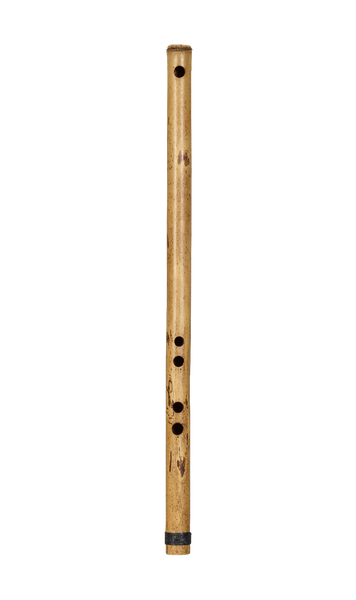
20 1/2 inch to 21 1/2 inches long.
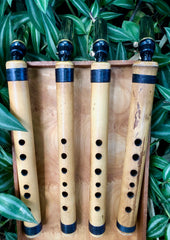
The bamboo used to make this flute is quite rare because of the long and slender inter-nodes it requires. But in 2023 I dedicated time to learn to make a good Egyptian Flute using an extra node and it came out so good I was able to drop the price. And the Poor Man's Egyptian Flute was born.
The Poor Man's Egyptian Flute is made with tropical Textillis Gracilis which is more sensitive to extreme heat and cold. The more expensive one is made with hardy Bambusa Multiplex from my bamboo grove. And some other bamboos growing here.
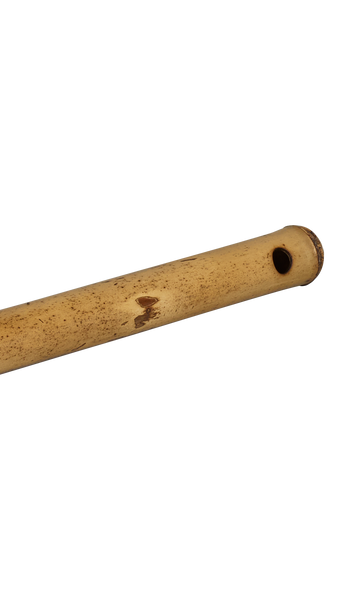
The inspiration for this flute came when someone gave me an Egyptian Ney which is a rim blown flute; very difficult to blow for a western player used to a side blown flute. So guided by the Ney, I made a side blown flute, tossed out 2 holes that I didn't hear to be harmonic and was splendidly surprised by what I had. Giving a sweet ancient poetic melodic flute.
It is now one of my favorite flutes that you too can own.
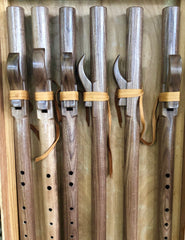
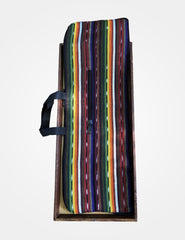
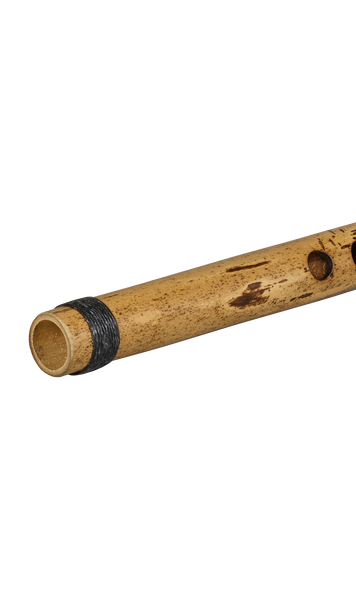
Every Egyptian Flute has a protective binding and comes with a Free Flute Bag to keep your flute safe, Free flute lesson and Free Shipping inside the USA!
Hi, Erik. I took your the medium Arabian and the Egyptian flute with me to Morocco and played in the dunes of the Sahara. People loved them and they helped to create a wonderful memory for the folks who accompanied me. Your flutes were a hit! Thank you. Sincerely, Larry in ArkansasNovember 15, 2019
Erik, Thank you for these wonderful flutes. I received my D Cocobolo Pennywhistle, my Bb Bamboo Sax and my Egyptian flute. They are wonderful. I cannot wait to play them on my music animation projects. I did not expect such good quality and the flute bags are real works of art. Thank you also for the lesson sheets and illustrations. This confirms all the more your unique personality! Best regards!Yves in Nyon, Switzerland, September 8, 2019
Erik, I still can't get over how beautiful this Egyptian flute is, both in sound and in looks. And being able to improvise so easily means I can actually enjoy the music as I play it. I've never been so free just to make sound and actually feel something from what I hear. It's the kind of music-making I've waited my whole life to be able to indulge in. : ) Thank you for sending me such a wonderful instrument.Larry in Little Rock AR. July 26, 2019
Erik, I work in a 6-story building at a university and ran into the stairwell on the 3rd floor to hear it with natural reverb. The music carried throughout the building, and I've already heard from several folks about how beautiful they think it sounds. That it looks as gorgeous as it sounds is just a really nice bonus. I'm in love with it already. Thank you again, and I continue to look forward to buying more flutes from you. Have a great day! : )-Larry in Little Rock AR, July 15, 2019
Erik, I 'am not able to put in words how grateful I feel each time I play on your Egyptian flute. The love you put in your work resonates in every note I play, and it makes me feel a better man every time I play. It contributes to my positive energy and it reflects on every human being I'm in touch in daily life. Thank you, Laurent Van Ice in Newcastle, United Kingdom September 15, 2018
Erik, I received my dark Egyptian flute earlier today. It is beautiful and haunting to play. After about ten minutes of playing to get acquainted, the flute began playing me. It is wonderfully smooth, light and magical to the touch and the tone resonates with the soul. It even smells pleasant. I have found a new companion with whom to pass my time and to accompany my story telling. Thank you for an excellently crafted instrument. John in Tacoma, Washington. July 1, 2018
Hi Erik! The lovely Egyptian Flute plays beautifully! It has a velvet smooth tone and I am able to play several octaves. I'm going to have so much fun exploring its parameters! I've been playing / teaching flutes all my life, and I plan on performing and recording with this flute! Thank you, for hand-picking the flute from your stock! Musically Yours, Jacki in Maryland Heights MO June 2, 2018
I received my Egyptian flute thank you so much!! This is amazing flute, amazing sound!! I'm very happy !! With Gratitude. Best Regards,Olga in New York May 30, 2017
Hi Erik, I just got my Egyptian flute in the mail today and I've never played a flute in my life, but after a few hours of practice I'm getting the hang of it and learning the notes! I'm super excited and cannot thank you enough! The sound this flute produces takes me across the hot sands and shimmering heat to an oasis!Nick Evon in Baldwin Park, California, May 6, 2017
Thank you so much for your work. I tried a Ney once and I could not play it even after years of playing flute. Your Egyptian flute gives me that sound in a very familiar feel and it is marvelous. It sounds great with reverb and my improvisations lead me to a very relaxed state of being. The flute has a very "sound-tracky" desert feel, which I love. It has become my new favorite flute. Carlos Correa in Coral Gables, Florida, Feb. 2, 2017
I listened to your night time recording of you on your Egyptian flute and pretty much melted on the spot. My cat was asleep and she started wiggling around dreaming and looking like she was smiling. Ordered one on the spot. My flute arrived safe and sound- thank you Erik it's beautiful and sounds amazing! You do incredible work. Jason Barcelon in Sausalito, California, Jan. 12th, 2017
Greetings Erik. The Vivaldi (bamboo) and Egyptian flutes arrived yesterday. They are brilliant players. Your work represents beautiful craftsmanship, all around wonderful sound and outstanding customer service! Thank you very much! Flute on my friend! Best wishes,Jason in Chatsworth, California, Jan. 6th, 2017
I received a beautiful Egyptian Flute that almost plays itself. True, genius craftsmanship! It feels alive in my hands. The flute is beautiful and the notes move me to another state of being. The deep, heavy notes vibrate my soul, awakening me to an emotional strength that I did not know existed. As you play up and down the scale, you will feel battle, heartbreak, euphoria and bliss. This is how a quality instrument should make you feel. Thank you Erik for this amazing flute. Kayla in Rodeo, California Dec 8th, 2016
Erik, I wanted to thank you for such beautiful craftsmanship, the sound of the Egyptian and Meditation Flute is beautiful and it will be a great aid… I am grateful for the wonderful surprise of the cases to protect them and the additional paperwork provided on how to play and to know about some of your journey. Thanks again, David Jones in New South Wales, Australia December 5, 2016
Erik,Received the Egyptian Flute today and I thank you! It is an amazing instrument that completely makes me feel as if I am in Ancient Egypt, so close to the Ney! And also thank you for giving me the opportunity to help the children in Nicaragua. Best regards, Arthur Olímpio, Recife, Brazil. March 17th, 2016
Erik, I received the natural Egyptian flute as a Christmas gift from my girlfriend. I don't think I could be any happier and I am so very thankful. I love this instrument, and although I've never touched a flute in my life, I see this flute traveling the world with me. I have a particular interest in ancient Egypt and Mesopotamia, and as in the description, it drops you into that forgotten time. The sound is enchanting, mesmerizing, and so very peaceful. Erik thank you for doing what you do. With much gratitude, Chris. Dec, 27, 2015
Erik, I received my Egyptian flute in UK on Wed 9th Dec after ordering it from you on Mon 7th. I would just like to say a massive thanks and appreciation for the quality of all aspects of your business and the beauty of this flute. It sounds wondrous! Much thanks for a superb service and a joyous instrument to keep me company for the foreseeable future! Highest regards, Terao Hedges in Oxford, United Kingdom Dec. 10th 2015
Hello Erik! This afternoon (just after a week!) I received my Oriental and Egyptian flutes. There are no words to describe my joy! They are fantastic, magic, wonderful sound and such a great work of a professional craftsmanship. I spend only a few times to get a really good sound! Oh, it's amazing! I want to thank you for all, for the emotions and passion that you gave me through these instruments of poetry! I think I'll order more from you later. Keep up the good work! Greetings from Italy, Francesco Aug 5, 2015
Dear Erik,I just got my Egyptian flute and I could not be more excited. I probably don't have to tell you how beautiful this instrument is, I'm sure you know, but wow! My expectations have been exceeded. I just wanted to send you a heart-felt thanks for using your talents to craft this beautiful piece. Thank you, for the new music you have brought to my life! With sincere gratitude, Tricia in New York City, June 15, 2015
Dear Erik, Minutes after I picked up my Egyptian Flute and began my search for the right way to blow I heard this intense, rich sound. From that moment on I stuck my lips like glue to this sweet spot and poured all I had in me. Though the sounds were a bit shaky, crude to be honest, I feel this experience has finally set me on a path I have always longed for. Mastering this brilliant instrument one day will make my dream come true. Thank You form the bottom of my heart. Best regards, Mike Skora from Breslau, Poland June 27, 2014
Erik, I'm very impressed about your excellent craftsmanship. The Oriental and Egyptian flutes are not only captivating instruments, but so beautiful objects. Being an architect, I closely look in detail your work and deeply appreciate the simple and clean design, not to speak about the candid and rich sounds: Outstanding! You also gave me the opportunity to give a tiny help to others when acquiring two of your instruments. Thanks for your time and care doing these beauties. Juan Arroyo in Mexico City Sept.13 2013
My warm regards to Sir Erik. I received the flute earlier today and it is wonderful. Thank you so much for such a beautiful instrument. May God Bless all of you!Ramesh, Aug 18, 2012
Hi Erik. The Oriental and the Egyptian flute I have just ordered from you are absolutely mind-blowing. You helped me to realize a big dream. I always wanted to play bamboo flutes, but it was so hard to get the tone. Then I have found you on you tube, saved money, ordered the flutes, went to the customs office an carried them home. In fact there are really beautiful! But this time only after 10 minutes I had the tone and after 30 minutes I was able to play melodies. I really can feel the vibration of the air in my hands and feel that these instruments are alive. This is a miracle. There are so many rich tones in these flutes. Thank you very much for freeing me from this not-to-be-able-to-play-a-bamboo-flute pain. I am sure it will not be the last order I do with you. I really do love these instruments. God bless you and your hands. Many thanks and greetings from Andreas GerichBerlin, Germany
Hi, Erik I'm very impressed by the quality and the design. The Oriental flute plays by itself almost. It's very easy to get a good sound out of it even for me, a beginner. The sound is really deep! The Egyptian flute is easier to play for me and I simply love it's mysterious sound and scale. I'm thinking of buying more from you. Thank you, Erik. Now I'm going to read your book. God bless you! In gratitude Rok Koritnik in Slovenia November, 2010
I am a sucker for exotic instruments, especially flutes. They don't come much more exotic than the Egyptian flute by Erik. The narrower bore of the Egyptian gives it a very sweet sound, particularly the second octave. Bill Butler, Austrailia, June 2005
NEWSLETTER SIGN UP
Sign up for our Newsletter and receive updates on exclusive promotions and events.
Helping Children
FlutemakerMinistries.org is commited to offer the children of Nicaragua a chance at a better future. Support our work and touch the world with practical love!
SELECT ANY AMOUNT YOU WOULD LIKE TO DONATE IN THE NEXT STEP.
Every donation makes a difference, so Thank you for getting involved!
Monthly Recurring Gift
THANK YOU FOR YOUR GENEROSITY! Make sure to stay updated to our progress by checking our Website and following us on Facebook. If you have more questions or you would like to get involved contact us here.
Choosing a selection results in a full page refresh.
Press the space key then arrow keys to make a selection.
Use left/right arrows to navigate the slideshow or swipe left/right if using a mobile device



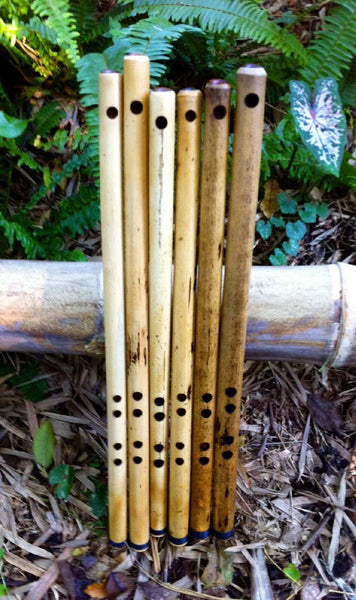



SIDE BLOWN FLUTE - Egyptian
Bamboo Body - Exotic Scale